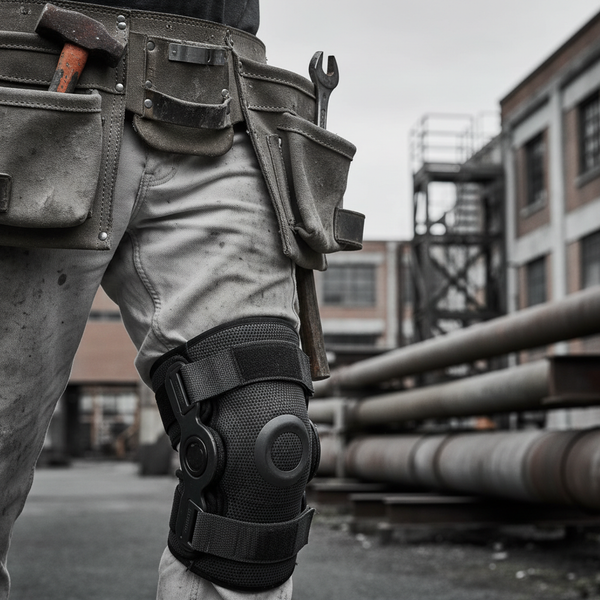
Pattern Recognition: How TCM Sees Your Pain Differently Than Western Medicine

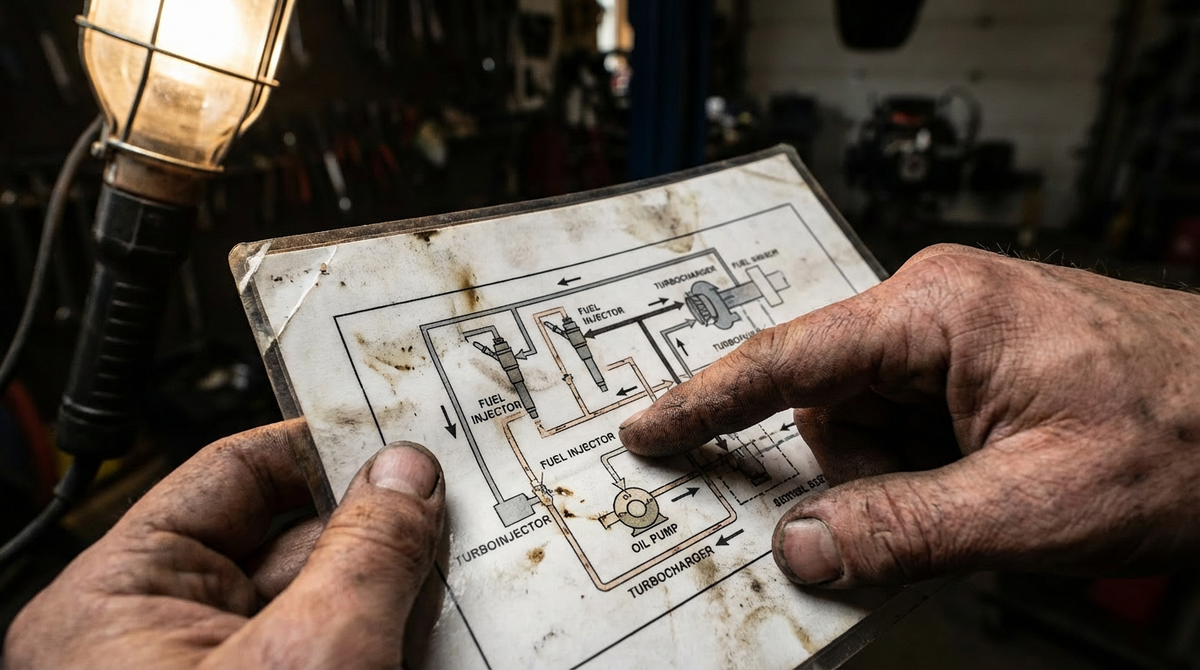
If you've ever had imaging come back clean and still been in pain, you already understand something important.
The image shows structure. It doesn't show function. It shows anatomy. It doesn't show patterns.
Western medicine diagnoses by finding structural abnormality, a torn tendon, a herniated disc, a fractured bone. These are real things. They matter. But a significant portion of the pain that working men carry every day doesn't produce findings on an MRI or X-ray. The tissue is intact. The blood work is normal. And yet the back doesn't work right, the shoulder is perpetually tight, the body doesn't recover the way it should.
This is where TCM's diagnostic approach does something different. It looks for the pattern.
What Pattern Recognition Means in Clinical Practice
Pattern recognition in TCM isn't mystical. It's a diagnostic methodology, a way of collecting and organizing clinical information to identify what's actually driving the symptoms.
In Western diagnosis, the practitioner is looking for a structural finding. In TCM diagnosis, the practitioner is looking for a functional pattern. The questions being asked are different. The information gathered is different. The treatment that follows is different.
A TCM intake includes:
Location and character of pain. Not just where, but what kind. Sharp or dull? Fixed or moving? Worse with pressure or relieved by it? Worse with cold or heat? These distinctions are diagnostically meaningful in TCM in ways they often aren't in Western assessment.
Time patterns. When is it worst? Morning, afternoon, evening? After activity or at rest? Consistently, or does it come and go? In TCM, the time of day when symptoms worsen corresponds to specific meridian activity cycles, this is useful diagnostic information.
Associated symptoms. What else is happening? Sleep quality. Energy levels. Digestive function. Headaches. Temperature regulation. Emotional patterns. These aren't separate from the musculoskeletal complaint, they're part of the same pattern.
History and constitution. How long has this been building? What makes it better or worse? What's the overall level of vitality, does the person recover quickly, or does everything take longer than it used to?
All of this goes into the pattern diagnosis. The result is a clinical picture that explains not just what's happening in the shoulder or the back, but what's happening in the system that's producing the symptom.
The Same Symptom, Different Patterns
Here's a concrete example that illustrates why this matters.
Three men come in with lower back pain. Same location, comparable severity.
Man 1: Pain is dull and achy, worse in the morning, improves with movement, associated with fatigue and feeling cold, has been gradually worsening over years of heavy work. He doesn't sleep deeply and takes longer to recover from hard days than he used to.
In TCM: Kidney deficiency pattern. The constitutional reserves have been depleted by years of physical output without adequate recovery. The lower back, governed by the Kidney system in TCM, is where this deficiency most clearly expresses.
Man 2: Pain is sharp and fixed, worse with sitting or static postures, better with movement. Associated with significant work and life stress. Tension in the hips and thoracic spine. Frustrated, irritable on difficult days.
In TCM: Liver qi stagnation with local qi and blood stagnation. Stress and emotional tension are being held in the musculature. The liver meridian's role in smooth movement of qi means disruption there produces exactly this kind of pain pattern.
Man 3: Pain is bilateral, associated with stiffness and swelling, worse in cold and wet weather, relieved somewhat by warmth. Accompanied by joint cracking, fatigue in the affected area.
In TCM: Cold-damp obstruction in the lumbar region. A pathogenic pattern rather than primarily a deficiency or stagnation presentation.
Three men with "lower back pain." Three different patterns. Three different treatment protocols. If you treat all three the same way, local needles to the lower back, you're going to have inconsistent results. Some will improve, some won't, and the conclusion will be that acupuncture is unreliable.
The reliability comes from accurate pattern diagnosis.
Why This Matters for Working Men Specifically
The patterns I see most consistently in tradesmen, construction workers, warehouse workers, and first responders reflect the specific demands of their work.
Kidney deficiency appears frequently because this demographic runs hard. Long hours, physical output, often inadequate sleep, high stress, not much recovery built into the routine. The constitutional battery gets run down.
Liver qi stagnation is common because these are men who carry significant responsibility, for crews, for job sites, for families, and don't have many outlets for the stress that comes with it. The tension goes somewhere.
Local qi and blood stagnation is the baseline MSK presentation, impaired circulation in an area from repetitive loading, injury, or chronic compression.
These patterns often layer together. A man with Kidney deficiency and Liver qi stagnation and local stagnation in the shoulder needs a treatment that addresses all three layers to produce meaningful and durable change.
This is the expertise that twenty years builds. Not just technical needling skill, pattern recognition. The ability to look at the full clinical picture, identify what's actually driving the problem, and design a treatment protocol that works with the pattern.
What This Looks Like for You
At Hard Hat Healthcare, the initial assessment is 65 minutes. Most of that time is intake, gathering the information needed to form an accurate pattern diagnosis. I'll ask about your pain in detail, but I'll also ask about your sleep, your energy, your stress, your history.
This isn't filler. It's the diagnostic process. The more complete the picture, the more precisely we can target the treatment.
After the intake, I explain what I'm seeing, the pattern diagnosis, in plain terms. Not the TCM language (unless you want it), but what it means practically: why your body is doing what it's doing, what's driving it, and what the treatment approach is going to address.
Then we treat.
Evening hours in Burnaby. Extended health benefits typically cover 80-85%. Free 15-minute consult if you want to talk through whether this is the right fit before committing to a full session.
If your imaging has come back normal and you're still in pain, you might be dealing with a pattern rather than a structural problem. That's worth looking at.
Book Your Assessment
IDENTIFY THE PATTERN. TREAT THE CAUSE.
Evening hours. Benefits covered. Free 15-min consult to start.