Vancouver Construction Workers: Here's What Your Body Actually Needs
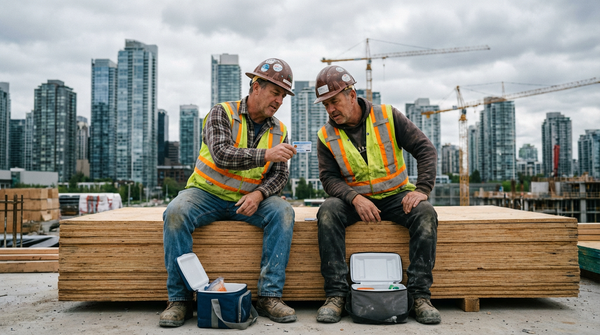
In twenty years of treating working men in Vancouver: the body keeps a ledger. Every load carried, every awkward angle held, every repetitive motion repeated a few thousand times. It records all of it. And at some point, it hands you the bill.


There's a particular kind of tired that doesn't show up on any bloodwork panel.
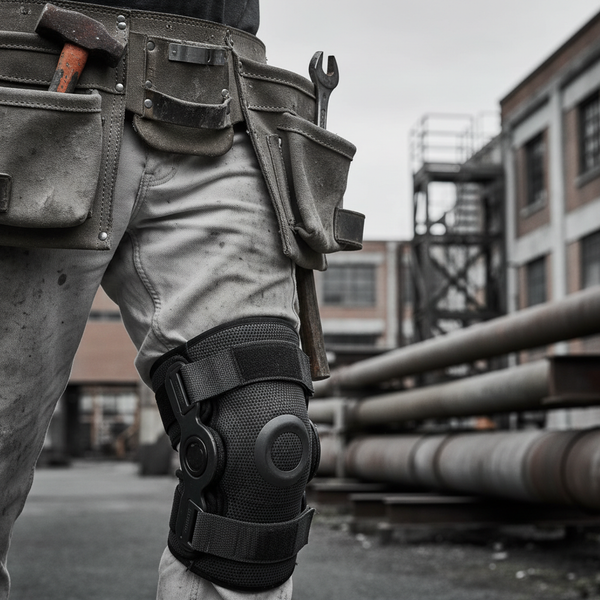
It lives in your lower back after a full day of concrete pours. It sits in your forearms after eight hours of repetitive tool work. It's the shoulder that's been "a bit off" since that one lift in October. The knee that talks to you on the stairs but not quite enough to take a day off.
You know the feeling. You manage it. You keep moving.
That's the job.
The question is usually about timing. The patterns I see at month two are straightforward. The same patterns at month eight have had time to layer.
What Western Medicine Misses About Trades Work
Most of the healthcare system was designed around a patient who sits at a desk eight hours a day and is under chronic stress. That's a real patient. That's a real problem.
But it's not you.
You're asking a different system to treat a fundamentally different kind of body.
When you walk into a GP's office with shoulder pain, they're looking for acute structural damage: rotator cuff tear, labrum issue, bone spur. If imaging comes back clean, the visit often ends with anti-inflammatories and a referral to physio. Which is fine, as far as it goes.
What that visit doesn't address: the pattern that caused the problem. The accumulated tension in the surrounding musculature. The movement compensation you've been running for three years without knowing it. The root of the thing.
This is where Traditional Chinese Medicine thinks differently.
Pattern Recognition: What's Actually Going On
TCM doesn't look at your shoulder in isolation. It looks at the pattern.
Here's a simple example. A lot of the guys I treat in trades come in with what they call "shoulder pain." When I assess them, what I'm actually seeing is a combination of local tissue restriction, global tension held in the neck and upper thoracic spine, and often a liver-gallbladder meridian involvement, which in plain terms means the body is holding stress and tension systemically, and the shoulder is where it's expressing most noticeably.
Treating only the shoulder would be like changing the oil in a car that's overheating. You did something. You didn't fix the problem.
This kind of pattern recognition, connecting the local symptom to the systemic picture, is what takes twenty years to develop. It's what separates a practitioner who gives temporary relief from one who actually shifts what's happening in your body.
The Trades Body: Specific Challenges, Specific Solutions
Tradesmen, construction workers, warehouse workers, first responders: there's a common cluster of presentations I see across these occupations.
Lower back and hip complex. Constant load-bearing, repetitive bending, standing on concrete or uneven surfaces. The lumbar spine gets compressed, the hip flexors tighten, and the glutes stop doing their job properly. What looks like a "bad back" is often a system-wide pattern of compensation.
Shoulder girdle and neck. Overhead work, tool vibration, carrying materials one-sided, these create asymmetric loading over time. The body adapts, muscles compensate, and eventually something that was "manageable" becomes something that's waking you up at night.
Forearms, hands, wrists. Repetitive gripping is one of the most underrated cumulative stressors in trade work. Trigger points in the forearm musculature cause referred pain, grip weakness, and eventually conditions like tennis elbow or carpal tunnel that take months to resolve if left unaddressed.
Sleep and recovery. Physical work demands real recovery. When the nervous system is chronically elevated, from physical load, from shift work, from the mental weight of managing a crew or a job site, sleep quality degrades. Poor sleep means incomplete tissue repair. It's a compounding problem.
Acupuncture and TCM address all of these. Not by masking symptoms, but by working with the patterns your body is running.
Why "Wait and See" Is Actually the Expensive Option
I understand the logic. You're busy. The discomfort is manageable. You don't want to take time off, you don't want to make a big deal of something small.
Here's the reality: the patterns that create injury rarely resolve on their own. They adapt. The body is brilliant at compensating, until it isn't. Until the compensated pattern creates a secondary problem. Until the thing you managed for two years becomes the thing that takes you off the job site for two months.
Twenty years. Five thousand patients. I have watched this sequence play out more times than I can count.
The guys who come in when something's "a bit off" recover faster, spend less money, and miss less work than the guys who come in after something's broken down.
That's not sales talk. That's just what the numbers look like over a long practice.
Evening Hours. Benefits Covered. No Nonsense.
I practice in Burnaby. I keep evening hours because I understand that taking time off a job site mid-day isn't realistic for most of the men I treat.
Most extended health plans cover 80-85% of acupuncture, your out of pocket on a subsequent session is around $24-28, depending on your specific plan. Separate from your massage, physio, and chiro coverage. Its own $500 pool. Already paid for in your benefits premiums.
If you've never used it, now you know it's there.
If you've had that shoulder thing for months, or the back thing that comes and goes, or you just want someone to look at the whole pattern and tell you what's actually happening, I offer a free 15-minute consult. No pressure, no commitment. You come in, we talk, I give you an honest read.
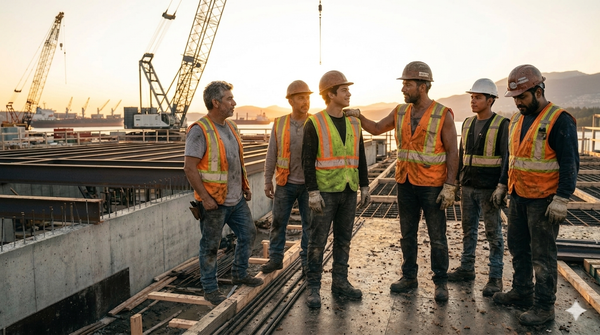
Working men built this city. Your capacity matters. Maintain it.
Book Your Appointment
YOUR CAPACITY MATTERS. MAINTAIN IT.
Evening hours. Benefits covered. Free 15-min consult to start.