What Is Traditional Chinese Medicine? A No-Nonsense Explanation
Traditional Chinese Medicine is a complete clinical system, two thousand years in continuous development. Here's how it actually works.
If you're a working man who does actual things with your body and your time, you're right to want something that makes sense before you commit to it. So here's what TCM is, what it does, and why it works, as plainly as I can put it.
Where TCM Comes From
Traditional Chinese Medicine is a complete clinical system that has been in continuous development and practice for over two thousand years. It includes acupuncture, herbal medicine, dietary therapy, and movement practices like qigong.
The system developed through direct clinical observation, practitioners treating patients, recording outcomes, refining theories based on what worked. Over centuries, this produced detailed clinical models for diagnosis and treatment that have been refined across thousands of practitioners and millions of patients.
In modern practice, TCM exists alongside Western medicine. It's not in opposition to it. Good practitioners know what each system does well and where the gaps are. There are things Western medicine does extraordinarily well, acute trauma care, diagnostic imaging, infectious disease. There are things TCM does well that Western medicine doesn't have good tools for: chronic pain patterns, fatigue, sleep disruption, functional recovery.
The Fundamental Difference in Thinking
Western medicine asks: what structure is damaged? The diagnostic pathway leads to imaging, bloodwork, and testing, identifying the specific tissue or organ that's malfunctioning and intervening directly.
This approach works brilliantly for acute injuries and disease. It's less effective for the kind of chronic, diffuse patterns that accumulate in men who do physical work for decades, because often the imaging comes back normal even when the body clearly isn't functioning optimally.
TCM asks a different question: what pattern is running?
The TCM practitioner is looking at the whole system. Not just where the pain is, but what else is happening in the body that might be connected to it. Sleep quality. Energy levels. Digestive function. Emotional patterns. Temperature regulation. How symptoms change with time of day, season, and stress levels.
This produces a diagnosis that isn't a tissue label, it's a pattern description. "Kidney deficiency with Liver qi stagnation and local qi and blood stagnation in the lumbar region" tells you more about what's happening systemically than "lumbar strain" does. It informs a different kind of treatment.
What Qi Actually Is
Here's where most explanations lose people, and fairly so.
"Qi" (pronounced "chee") is the term TCM uses for the body's functional energy, the capacity of the system to do its work. In plain terms: the energy that powers muscle contraction, tissue repair, immune response, mental function, and every other physiological process.
This is not mystical. Every biological function requires energy. The body's production, distribution, and utilization of that energy is what TCM is largely concerned with.
When practitioners say qi is "stagnant," they mean energy and blood flow in a specific area or system is impaired, blood isn't circulating optimally, tissue isn't getting what it needs, the area isn't clearing metabolic waste efficiently. This produces pain, stiffness, swelling, restricted function.
When practitioners say qi is "deficient," they mean the system doesn't have adequate functional reserves, not enough energy for the demands being placed on it. This produces fatigue, poor recovery, weakness, susceptibility to illness.
These map closely to functional physiology. The language is different. The underlying observations are not.
How Acupuncture Works
Acupuncture involves inserting fine needles at specific anatomical points along the body. The mechanism of action is well-studied.
At a local level, needling creates a controlled micro-trauma that stimulates tissue repair responses, increases local blood flow, and releases muscle trigger points. This is the most mechanistically familiar explanation, it's essentially structured tissue stimulation.
At a systemic level, acupuncture stimulates the nervous system. Needling at specific points activates afferent nerve fibres that signal through the spinal cord to the brain. This triggers release of endogenous opioids (the body's natural pain-reducing compounds), serotonin, and other neurotransmitters. It modulates the autonomic nervous system, shifting the body from sympathetic dominance (stress response) toward parasympathetic dominance (rest and repair). It influences the hypothalamic-pituitary-adrenal axis, the central regulator of the stress response.
In practical terms: acupuncture reduces pain, reduces inflammation, improves circulation, regulates the nervous system, and supports tissue repair. These are measurable physiological effects, not placebo.
What It Actually Treats
In my practice, focused on working men in Vancouver, the most common presentations I treat are:
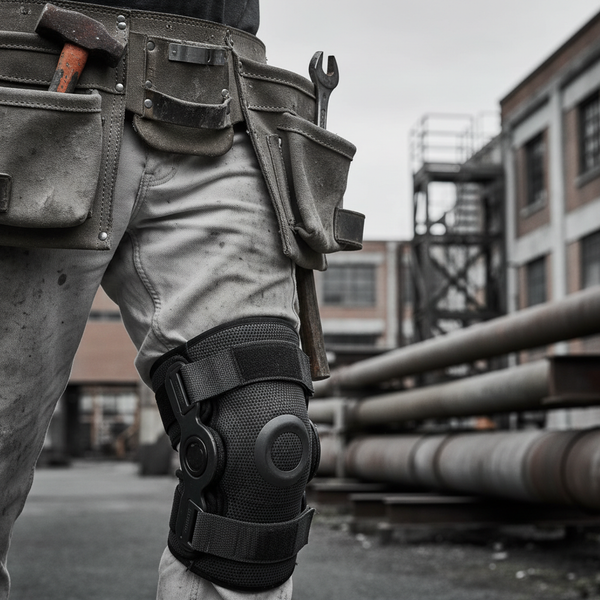
Musculoskeletal pain. Back pain, shoulder problems, knee issues, neck and headaches, all the wear patterns of physical labour. This is the strongest evidence base in acupuncture research and the most consistent clinical outcome in my practice.
Fatigue and recovery. When physical demand outpaces recovery capacity, the deficit accumulates. TCM has specific protocols for supporting the body's recovery systems.
Sleep disruption. The nervous system regulation effects of acupuncture translate directly to improved sleep quality, not just sleep quantity.
Stress response. Men in demanding work environments with significant responsibility, crew leads, project managers, guys carrying family and financial pressure, carry a physiological stress load that doesn't discharge easily. Acupuncture addresses this at the system level.
The Bottom Line
TCM is a clinical system, not a belief system. You don't need to subscribe to any particular philosophy to benefit from it. You need to show up, give honest information, and let the treatment work.
I've been practising for twenty years. I've treated five thousand patients. I don't recommend it for everything and I'll tell you honestly if I think something is better handled by a different practitioner.
If you have questions about whether it's appropriate for what you're dealing with, that's what the free 15-minute consult is for.
Evening hours in Burnaby. Benefits covered. No ceremony, no incense, no speeches. Just clinical work.
Get Your Questions Answered
NO CEREMONY. JUST CLINICAL WORK.
Evening hours. Benefits covered. Free 15-min consult to start.