The Injury That Won't Heal
You rested it. You went to physio. You iced it, stretched it, wore the brace. Months later, it's still there. Here's what's actually going on, and why standard treatment often misses it.

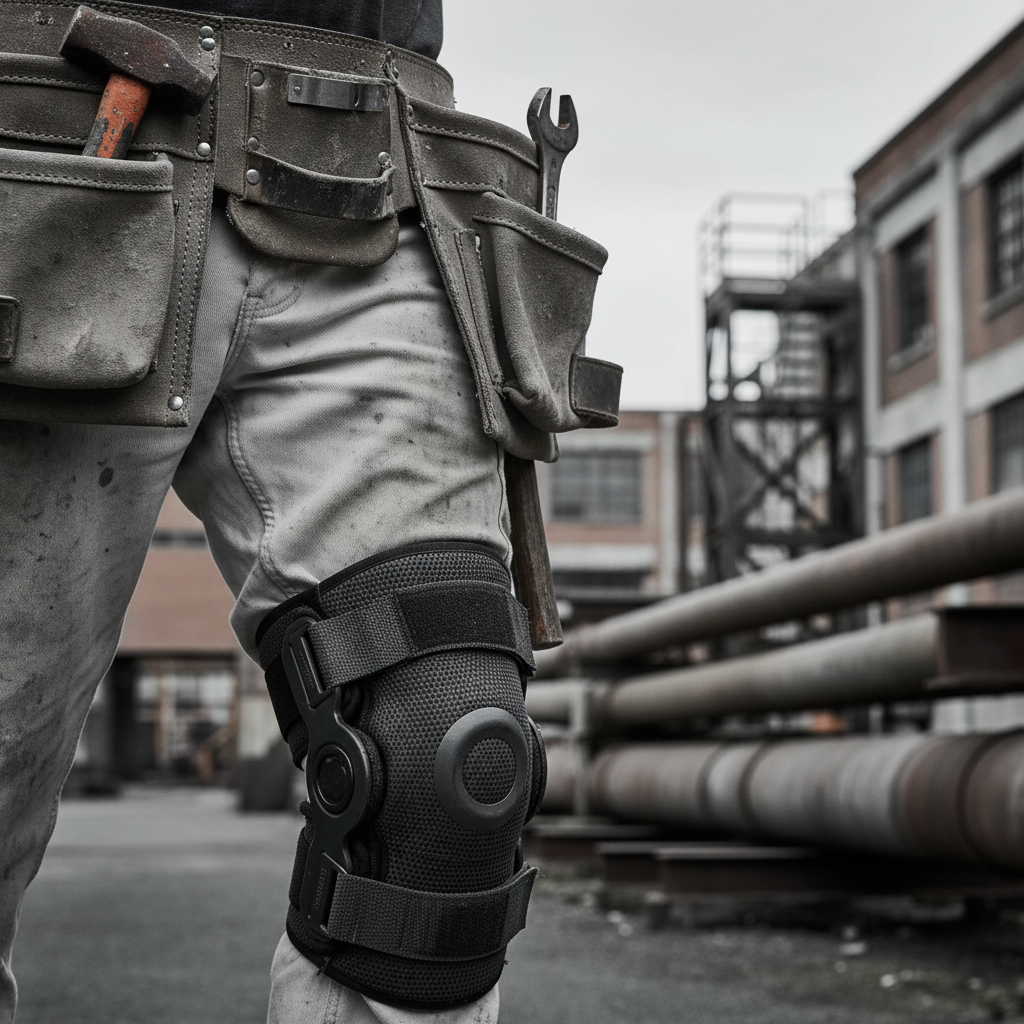
I've had this conversation hundreds of times.
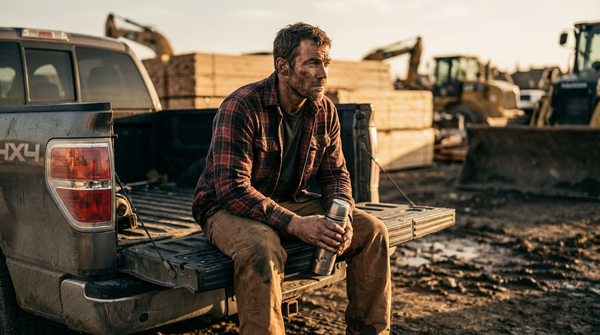
A guy comes in carrying a shoulder, a forearm, a knee. He's been managing it for six, eight, sometimes twelve months. He did the right things: took time off, went to physio, wore the brace. It improved a bit, then plateaued. Now he's back to full load at work and it's just... there. Not debilitating, but never gone.
He wants to know why it won't finish healing.
It's a fair question. And the answer matters, because the way you understand it determines what you do next.
Why the Plateau Happens
In TCM, we look at chronic soft tissue injuries through the lens of circulation: specifically, what's happening in the local tissue over time.
Acute injuries respond well to rest and direct physical therapy. The tissue is actively inflamed, blood is moving to the area, the repair process is underway. The body is doing what it's supposed to do.
Chronic injuries are a different situation. The acute phase resolved, but the tissue didn't fully recover. What you're left with is an area with restricted circulation: not enough fresh blood moving in, metabolic waste not clearing efficiently, the local environment not quite right for the final stages of repair. The tissue is stuck.
In TCM terms, we'd call this Qi and Blood stagnation at the local level. That might sound like jargon, but the physiological picture is fairly concrete: microcirculation is compromised, the tissue is undernourished, and the normal signals that drive full repair are muted.
The injury isn't actively failing. It's just not finishing.
What Physio Does Well (and What It Misses)
Physiotherapy is excellent at the structural component of recovery: reestablishing range of motion, rebuilding strength around a joint, correcting compensatory movement patterns that develop when you guard an injury for months. That work matters and I don't dismiss it.
What it doesn't address is the systemic picture underneath the local injury. For a lot of working men, the shoulder that won't fully heal is happening in a body that's also running a chronic sleep deficit, carrying years of cumulative physical load, and operating under persistent low-grade stress. The Kidney System in TCM governs the deepest reserves of repair capacity. When those reserves are chronically depleted (which is common in men doing physical work for a decade or more), local tissue injuries take longer to close, and sometimes stall entirely.
This is the pattern I see most often in trades and construction workers with long-standing injuries: the injury itself isn't the whole story. The terrain it's healing in is the other half.
A 2018 updated meta-analysis by Vickers and colleagues, drawing on data from over 20,000 patients across 39 randomized trials, found that acupuncture produced clinically meaningful improvement in chronic musculoskeletal pain beyond both placebo and standard care alone.1 A separate 2020 systematic review found acupuncture outperformed both sham treatment and conventional therapy for lateral epicondylitis: one of the most common repetitive strain presentations in manual workers.2
The mechanism isn't mystical: acupuncture needling improves local microcirculation, stimulates tissue repair signaling, and shifts the nervous system out of the guarded, hypervigilant state that develops around a chronic injury site. It addresses both the local stagnation and the systemic depletion that's allowing it to persist.
What I'm Looking For in the First Appointment
When someone comes in with an injury that's been stalled for months, my first job is pattern recognition. Not just: where does it hurt? But: what's the whole picture?
I want to know how they're sleeping, how their energy holds through the week, whether the pain is worse in the morning or by end of shift, whether cold makes it worse or heat. I want to know what their work schedule has looked like for the past two years.
The answers to those questions tell me whether we're dealing primarily with a local circulation problem, or whether the Kidney and Liver Systems are involved in a meaningful way. The Liver System in TCM governs the sinews: tendons and connective tissue throughout the body. Chronic Liver System deficiency is a common finding in men with multiple persistent tendon or ligament injuries, or injuries that keep recurring at the same site.
Understanding that pattern changes the treatment. It means we're not just needling the shoulder; we're also supporting the systems that are supposed to be providing the repair capacity. That's the difference between treating the injury and treating the person with the injury.
The Honest Timeline
I'll tell you what I tell everyone: this takes time. An injury that's been stalled for eight months isn't going to resolve in two sessions. A realistic course for a chronic soft tissue injury with systemic involvement is six to eight sessions over six to eight weeks, with reassessment at that point.
Most people start noticing change around sessions three or four: less stiffness first thing in the morning, better range of motion, the dull background ache starting to quiet. The final resolution usually happens gradually after that.
What I can offer is a clear assessment after the first appointment: what I'm seeing, what I think the pattern is, and what a realistic treatment plan looks like. If I don't think acupuncture is the primary tool for what you have, I'll tell you that too.
If you've been managing something that should have healed by now, that's worth looking at properly.
Book a session or start with a free 15-minute call: hardhathealthcare.com
Direct billing available for Sun Life and Pacific Blue Cross extended health plans.
References
1 Vickers AJ, Vertosick EA, Lewith G, et al. Acupuncture for Chronic Pain: Update of an Individual Patient Data Meta-Analysis. J Pain. 2018;19(5):455–474.
2 Zhou Y, Guo Y, Zhou R, Wu P, Liang F, Yang Z. Effectiveness of Acupuncture for Lateral Epicondylitis: A Systematic Review and Meta-Analysis of Randomized Controlled Trials. Pain Res Manag. 2020;2020:8506591.