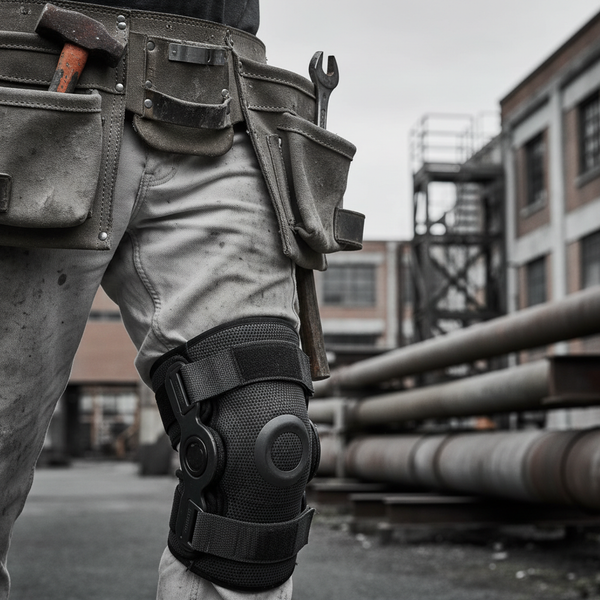
The Body Doesn't Know the Difference Between a Job Site and a Baseball Diamond


I played softball for years with a crew of trades guys. Same group, same league, most summers. And after a couple of seasons of treating half of them in my clinic, I started noticing something that had nothing to do with softball at all.
These were guys who showed up to the field already carrying the week: a shoulder that had been tight since a job three weeks back, a knee that clicked on the dugout steps, backs that hadn't fully unloaded from Friday's shift before Saturday's first pitch. Nobody said much about it. You'd just catch it in how guys moved warming up, a little protective on one side, rotating around something instead of through it. Then the game started and that same shoulder threw out a runner at second, the same back twisted into a swing, and nobody thought twice about it because that's just how the summer goes.
It's All Just Load
The same guy who pushes through a long shift without complaining is usually the same guy who plays through a tweaked hamstring because the team's short a player. It's not two separate instincts; it's one instinct showing up in two places. And that instinct isn't a flaw. It's usually what makes someone good at their job and good on the field. You don't get hired back on a crew or kept in a starting lineup by tapping out at the first sign of discomfort.
The thing worth noticing is that your shoulder doesn't sort the load by source. It doesn't file "hammer swings" separately from "bat swings" or keep the knee's job-site hours distinct from its rec-league hours. It's all load, stacking on the same joint, the same set of muscles, the same nervous system trying to keep pace with both sides of the week. Summer is when that tends to get loud, because the schedule on the field picks up at exactly the time the job site doesn't slow down, and there's no real gap between the two for the body to clear anything out.
What I Actually See in Clinic
In TCM, this kind of pattern usually shows up as accumulated strain in the tendons and connective tissue around a joint that's been chronically overloaded, what we'd call stagnation building in a specific area rather than a single acute injury. It's why the same shoulder keeps acting up instead of a different one, why it's always the right knee and never the left. The body's been compensating around one point for months, and the throw or the swing or the dive is just the thing that finally makes it loud enough to acknowledge. These presentations don't usually come in dramatically either. More often it's the guy who's been calling something "a little stiff" for a month, or the one who ices his elbow in the dugout like it's just part of the game-day routine now. That's not nothing, and it's not catastrophic. It's a pattern, and patterns respond to treatment in a way that rest alone usually doesn't.
This Isn't About Slowing Down
Most of the guys I played ball with would have told me to mind my own business if I'd suggested they ease up on the season, and honestly they'd have had a point. That's not what I'm getting at here. The same guy who keeps his tools maintained between jobs, who catches a small problem before it turns into a lost day, is usually already equipped to apply that logic to his own body. It's just not a habit most guys have extended there yet. The instinct is the same; the application is different.
If there's a shoulder, knee, or back that's been part of your summer in a way it probably shouldn't be, it's worth taking a proper look at the pattern rather than running another round of ice and optimism. I offer a free 15-minute consult if you want to talk through what's actually going on before you commit to anything. No pressure, no pitch, just a straight conversation about what your body's been telling you.
Book your free 15-minute consult: https://drcarolinaleonnd.janeapp.com/#/staff_member/15